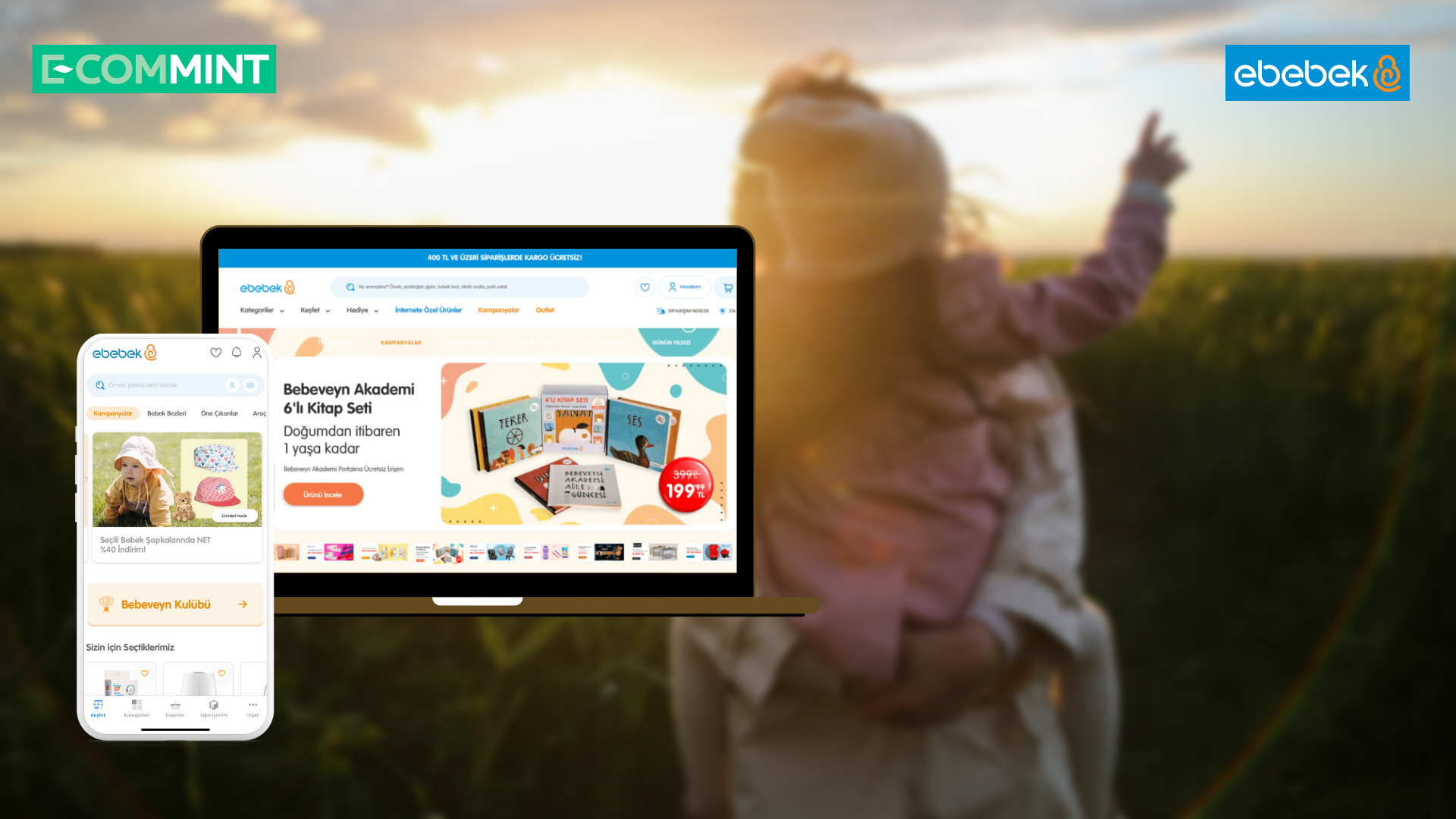

Customers want personalized experiences across the touchpoints of their favorite brands, and the type of message they receive plays a crucial role in building long-term relationships. Customers think and act based on the personalized experiences they receive.
To personalize your customer experience, you need to know and understand the users on your mobile app and website. The Netmera Platform enables you to understand and recognize your customers.
In the past, store owners operating physical stores had to remember the names, product/service preferences, purchase choices, and lifestyles of their most loyal customers and use all this information to provide a delightful and memorable experience.
Today, technology allows businesses to collect customer data, such as demographic information, anniversary dates, and purchase history, to deliver personalized customer experiences. Mobile app brands use aggregated data to address customers by name, recommend products based on their gender, location, and past purchasing behaviors. Nowadays, customers expect personalized and targeted marketing from their favorite brands. Sending the same push notifications or discount offers to everyone no longer works.
For this reason, mobile app marketers continuously work to restructure technology to deliver best-in-class and personalized experiences across channels. While evaluating different marketing tools and technologies, they focus on data and analytics capabilities, personalization technologies, and customer data profile management capabilities.
The Evolution of Data-Driven Marketing:
Marketing has come a long way. Marketers have become more creative, data-driven, and accountable for results with the evolution of marketing. Globally, marketers track lead generation activities and understand how much pipeline they need to generate to hit their desired sales figures.
When marketing technologies were first introduced, many tools (such as individual social media channels or on-page website analytics) focused on a single marketing activity and produced data on numerous standalone dashboards. However, data-driven marketers are more likely to choose marketing technologies that can easily integrate with other platforms to make obtaining a unified view of the customer journey and connecting to the bigger picture seamless.
What Is Personalization?
Personalization is a marketing technique that uses customer data to deliver messages to a targeted audience segment at the same time. Personalized marketing typically uses general customer data, such as user inputs, browsing history, most visited categories, and past purchases, to segment users into target groups. Instead of sending random messages to the entire user base, personalization delivers highly contextual messages at the right time.
Today, most companies can analyze both online and offline data, so basic personalization is no longer a differentiator but rather an expectation from customers. Previously, customers expected nothing more than seeing their names in an email. In today’s changing landscape, every business offers some level of personalization. However, basic personalization in marketing is not enough for your brand to stand out or get ahead in the competition. To survive and build lasting relationships, you must leverage advanced personalization methods that bring your brand closer to the wants and needs of your customers.
Individualization: Redefining Personalization to Offer One-to-One Experiences
Individualization is a technique that automatically personalizes and optimizes the customer experience for each individual. It requires a higher level of data integration and analysis, omnichannel delivery, and artificial intelligence to predict customer behavior and adapt to real-time needs.
For example, suppose a user visits your e-commerce app to buy a smartphone. By using personalization techniques, you can instantly send a notification to the shopper with recently viewed products, related recommendations, best-selling phones, and more to boost engagement and achieve higher conversions.
What Is the Difference Between Individualization and Personalization?
Every time a customer visits your mobile app and searches for a product, they share data about their current interests and needs. This data not only tells you what they are looking at but also provides insights into why they are searching for a specific product.
That said, individualization and personalization are often used interchangeably. Personalization was initially defined as the process of offering individualized experiences to each person. However, at the time the term was coined, few technologies could meet its intended definition.
Marketers adopted the term, supporting it with segmentation and product recommendation algorithms, which only partially captured the potential of customized personalized experiences.
Today, the marketing industry is in a golden age of innovation. New technologies make it possible to deliver experiences that closely resemble the original intent of personalization. With new technology, terms like one-to-one personalization, Personalization 2.0, individualized personalization, or individualization have emerged.
Individualization is a form of advanced personalization strategy.
Individualization does not replace segmentation-based marketing or personalization. It adds significant value to your overall personalization strategy. Brands that successfully deliver a seamless customer experience and personalization often employ three distinct personalization strategies to achieve long-term customer experiences:
- Optimization – Continuously test your marketing messages across your app’s user base and optimize them for the best results every time.
- Segmentation – Increase the relevance of your messaging by considering key differences within user segments.
- Personalization – Connect and engage with customers individually to deliver a seamless user experience and increase app usage.
When used in the right combination and context, these three strategies can help you seize opportunities and achieve your brand’s overall personalization goals.
Individualization goes one step further:
Compared to optimization and segmentation strategies, individualization overcomes two significant limitations:
- Inability to deliver immediate results
- Lack of scalability
Individualization represents a fundamentally different approach. This unprecedented level of marketing message relevance tailored to each user translates into higher revenue and increased customer loyalty. It is no surprise that what app-first businesses aim to adopt is evolving into individualization.
How Does Individualization Work in Mobile Marketing?
Individualization builds on the different layers of personalization that your consumers receive and respond to. It considers every type of data you know about the customer, such as user profile attributes, location, past actions, and more. Personalization modifies key elements like content, visuals, and timing to deliver an engaging and tailored app user experience.
Individualization, however, relies heavily on AI-powered technology to deliver a personalized experience for each customer based on all available data. Customer data is continuously updated based on their current preferences, browsing patterns, and behavioral data in action. Since data is constantly collected, AI enables consistent and scalable improvement of each individual’s personalized experience.
Contact us to stay connected with your customers across all channels and maintain communication with your users at any time through mobile, web, SMS, and email alternatives.